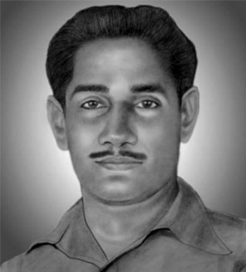
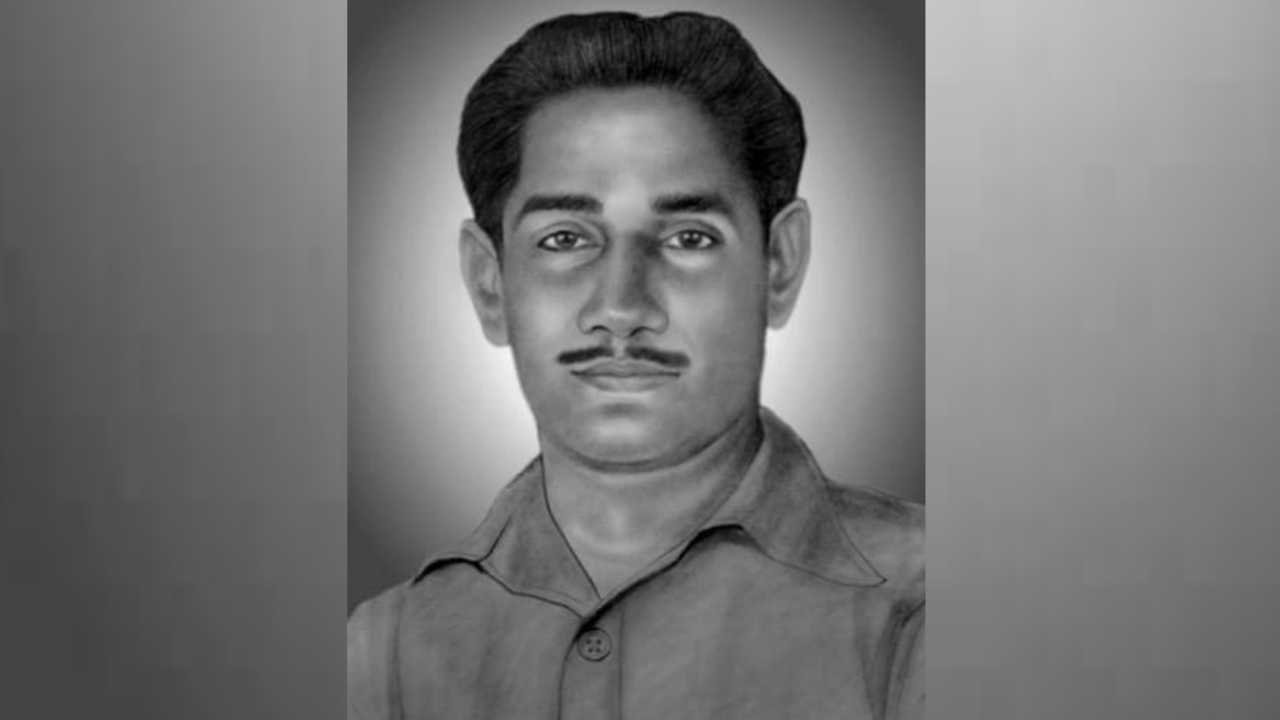
Soldier of the Indian National Army, Military Secretary to Netaji Subhas Chandra Bose, and career diplomat of independent India. A RIMCollian who carried the freedom struggle in his bones, and spent the rest of his life carrying India's name abroad.
“I have only one life, but even if I had a hundred, I would have willingly sacrificed all of them for the sake of Netaji.”The Illustrated Weekly of India, 21 January 1990
He descended from a long line of Sufis, born in Daudnagar near Vaishali, Bihar. At eighteen he entered the Rashtriya Indian Military College as a cadet of the 21st Course, House Roberts — and by twenty-six he was Military Secretary to the most consequential Indian revolutionary of his generation. Between a prisoner-of-war camp and an ambassador's residence lay a life devoted, without pause, to the idea of India. This page is kept by his family, for the generations who will only ever know him through it.
From a cadet's dormitory in Dehradun to embassies across three continents — the dispatches of a single life, in order.
Joined as a cadet of the 21st Course, House Roberts — the beginning of a lifelong RIMCollian identity he wore with pride until his last years.
Moved on to the IMA to complete his officer training.
Began his career as a British Indian Army officer, on the eve of the Second World War's spread across Asia.
Captured following the British collapse in Malaya and the fall of Singapore — the event that would redirect the rest of his life.
Joined the INA and volunteered for the regiment named for Netaji himself, choosing to fight for India's independence rather than sit out the war as a prisoner.
Fought on the Imphal, Kohima and Arakan fronts as the INA advanced toward Indian soil. Noticed for his conduct, he was appointed Military Secretary to Netaji Subhas Chandra Bose and became the liaison between the Provisional Government of Azad Hind and the INA.
As Allied superiority in the air and on the ground forced a disastrous retreat through the jungle, he was taken prisoner once more and sent for trial — his case among the thousands that followed the famous Red Fort trials.
Ten thousand townspeople turned out in Patna to receive him, garlanding him and presenting a purse of Rs. 2,121 in honour of his service. Local papers described the address he gave that day against British rule with undisguised admiration.
With the INA deemed illegal and its soldiers denied pensions or pay, he set up camp at his family home, ‘Wali Manzil’, housing veterans and helping them rebuild their lives and find work.
Pandit Jawaharlal Nehru invited him to breakfast and to join the newly formed Indian Foreign Service.
His first posting returned him to Burma — a country of old friendships from his independence-movement days — where he shared a house with a fellow young bachelor-diplomat, K.R. Narayanan.
Returned to India to serve as Special Officer in charge of Goa during the movement for its liberation from Portuguese rule.
Married Zeanut Hussain, who would go on to serve at his side through every posting that followed, and who continues her own work in civil society in Patna to this day.
Posted to Berlin as Consul General following the birth of his first son, Imran Ahmad.
His second son Adnan was born in Berlin. He then returned to Delhi for the prestigious National Defence College course at Raksha Bhavan.
Served as India's Deputy High Commissioner to Malaysia.
Returned to Iraq as Ambassador in March 1966, also responsible for India's relations across the wider Gulf. His daughter Aliya was born in Baghdad that year. He held the post until 1971.
Returned to the Ministry in Delhi as Chief of Protocol.
Served as India's Ambassador to Indonesia.
His final posting, as High Commissioner to Canada, from which he retired in 1979 after three decades in the Indian Foreign Service.
Served on the Eastern Region board of the Reserve Bank of India, the Banking Recruitment Board, and as a trustee of the historic Khuda Baksh Library. He travelled the country extensively, speaking about the freedom movement and the India he believed in — open, plural, and unafraid of its own diversity.
He is survived by his wife Zeanut Ahmad, his sons Imran and Adnan, his daughter Aliya, and a family that continues to carry his story forward.
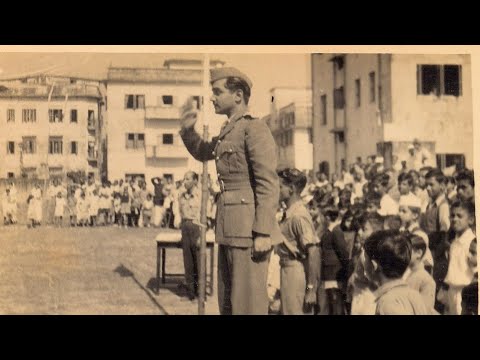
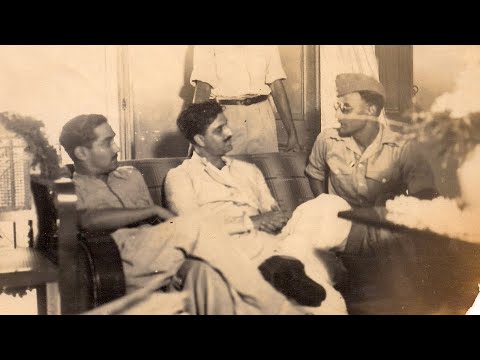
A handful of surviving photographs, kept by the family across three continents and nearly a century.
A letter to his mother, written during the first INA trial at the Red Fort, in his own hand.
“Dear Mother,
Jai Hind.
You must have already heard about the release of the officers that were tried in the first trial. This news is very encouraging and will, I hope, relieve your anxiety to a great extent.
I expect to meet you soon either in the Red Fort or at home.
Love to all.
With respect,
Your son”
“Col Mahboob Ahmad was a distinguished diplomat known for his noble character, polished demeanor, and significant contributions to India’s image abroad, particularly in Iraq. His leadership and personal qualities fostered strong international relations and earned him widespread admiration. He looked like a ‘nawab’, very handsome, spoke in the most polished manner and greeted people as they were, regardless of nationality.”Air Chief Marshal Nirmal Chandra Suri
It is in his words but put together by Patliputra Times and Khuda Baksh Library.
“Azad Hind Fauj ki Kahani
Subhash Chandra Bose ki Kahani
Meri Apni Kahani”
The late Shri Awadhesh Preet commissioned and serialized the memoir of Colonel Mahboob Ahmad in the Sunday magazine of Patliputra Times in 1986. The Urdu and English versions were collated and published by Khuda Baksh Library and its Director Dr AR Bedar. Scans of the diary are available to read in full below.
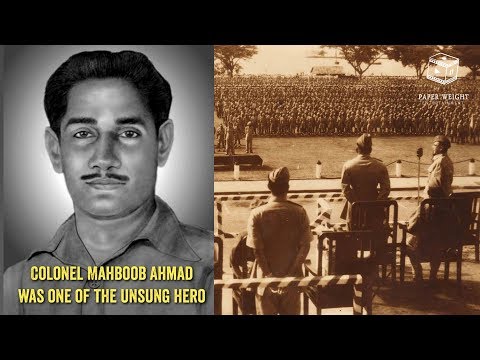
A chance visit by former Air Chief Marshal NC Suri set the RIMC Ed Board on the trail of a forgotten hero. This tribute to Col Mahboob Ahmad — INA officer, freedom fighter, and diplomat — is published by RIMC.
From interviews given across five decades — the day of his release in 1946, and reflections offered near the end of his life.
“We never thought we were slaves. We had learned that as soldiers, white or black, we were all equals.”To the press, Patna, 19 April 1946
“The I.N.A. was not born to surrender.”On the retreat from Imphal, 1946 interview
“नेताजी आज़ादी अपनी शर्त पर चाहते थे — अंग्रेज़ों की शर्त पर नहीं।”Netaji wanted freedom on his own terms — not the terms of the British · Dharmyug, 16 Feb 1986
“I have only one life, but even if I had a hundred, I would have willingly sacrificed all of them for the sake of Netaji.”The Illustrated Weekly of India, 21 January 1990
Personally signed portraits of heads of state and statesmen he came to know during his years as a diplomat, kept in the family archive.
“He was a man of great principles. Integrity was his most important pillar — it was what guided him in all manner of decision-making, including within the family. He believed strongly in equality and justice, and though born into a Muslim home, he equally respected all people and their religions.”Zeanut Ahmad, his wife
Zehra Atal, Asmara Ahmad, Lucille Maria Merks, Linah ZM Ahmad, Saba Ahmad, Saib Ahmad, Amnah Ahmad, Hasan Latif.
Original clippings spanning 1946 to 1990, preserved by the family. Click any clipping to read it in full.
Further photographs, certificates, and press cuttings from his years with the Azad Hind Fauj, kept by the family alongside the plates above. Click any item to view it in full.